Uluru is not a backdrop. This sandstone monolith in the Northern Territory functions as a legal, cultural and ecological framework whose management reveals tensions between Australian identity, Indigenous rights and the tourism economy. To understand how a famous monument in Australia tells the story of the country, we need to look at who controls the narrative, the revenue and access to the site.
Anangu intellectual property and control of Uluru’s tourism narrative
Uluru-Kata Tjuta National Park is jointly managed by its traditional Anangu owners and Parks Australia. This co-management goes beyond maintaining trails or managing ticket sales.
For the Wintjiri Wiru experience, an Anangu working group has provided cultural oversight of the content shown since 2020 and manages revenue generated from the use of Anangu intellectual property in Voyages’ activities. This means the Anangu are not simply consulted beforehand and then sidelined: they approve, amend or reject what can be shown to the public.
When exploring a famous monument in Australia such as Uluru, this aspect of cultural governance is often missing from travel guides, which simply note that climbing the rock has been prohibited since 2019.
Protecting the site also means deciding what visitors cannot see or learn. Some knowledge and places are not intended to be shared with the public. Visiting means respecting cultural boundaries, not just environmental conservation rules. Silence around certain knowledge is an integral part of the heritage.
Climate research at Uluru: Anangu knowledge and Western science
A program involving the Anangu, Parks Australia, CSIRO and several Australian universities is studying the effects of hot droughts on the park’s flora. The Muṯitjulu Mala Rangers are actively involved, both in the field and in interpreting the findings.
A study presented by ANU in November 2026 examines the traits that helped some desert plants survive a drought-related dieback event. The Anangu helped define the research objectives, select the species and sites to be studied, conduct fieldwork and interpret the data.
Cultural burning and community nurseries
Approaches being explored include cultural burning and establishing community nurseries to restore plants of high cultural value. These practices are not about turning ancient knowledge into a museum exhibit. They are practical ecological management tools, tested over the long term by local communities.
This model shows how an Australian monument and its ecosystem can become a meeting place for two knowledge systems without one absorbing the other. Local knowledge directly informs decisions about managing the national park.
Sydney Opera House and World Heritage: another layer of Australian identity
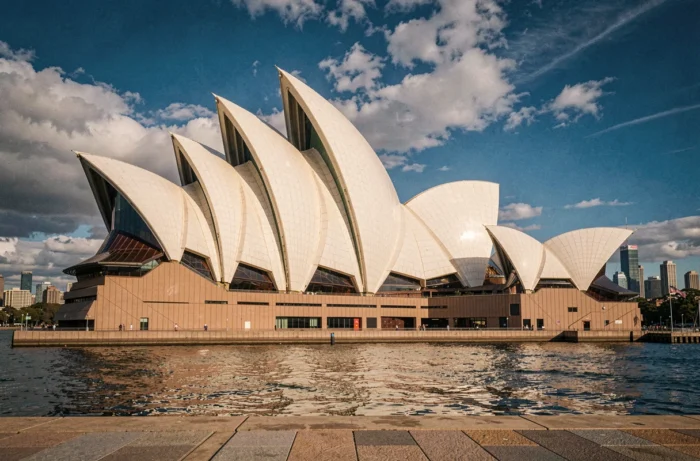
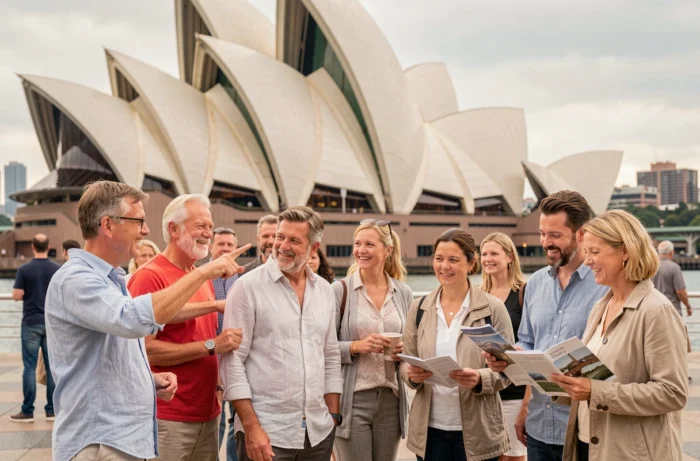
The Sydney Opera House, a UNESCO World Heritage Site, tells a different but complementary story to Uluru. Designed by Danish architect Jørn Utzon following an international competition launched in 1956 and opened by Queen Elizabeth in 1973, the building embodies an Australia looking towards architectural innovation and the international cultural scene.
UNESCO recognises the Opera House as a major 20th-century architectural work that brings together innovative approaches to form and structural design. Its shell-shaped vaults, set on a vast platform at the end of a peninsula in Sydney Harbour, have had a lasting influence on contemporary architecture.
What the Sydney Opera House doesn’t tell us
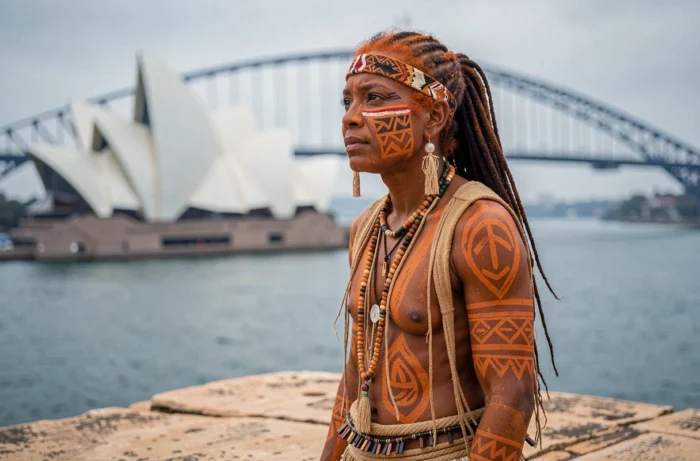
The monument’s official story highlights creative genius, technical achievement and global reach. It leaves in the shadows the land on which it stands: Aboriginal Country with a history stretching back tens of thousands of years before British colonisation. The juxtaposition of the Opera House and Uluru in Australia’s national imagination reveals precisely this tension between colonial heritage and Indigenous heritage.
- The Sydney Opera House represents Australia as a modern, cosmopolitan nation, open to the Pacific and the West.
- Uluru embodies a cultural memory whose traditional owners control how it is shared and commercialised.
- The Australian War Memorial in Canberra and Kakadu National Park add further layers—military and ecological—to the country’s monumental identity.
Australian monuments and tourism: who decides what can be commercialised
Tourism around Australia’s heritage sites raises practical questions of governance. We see a recurring imbalance between a monument’s media visibility and the degree of control exercised by the communities concerned.
At Uluru, the cultural oversight arrangement established with Voyages is a rare example of traditional owners taking part in commercial decisions. Most Indigenous heritage sites around the world do not have such a mechanism.
The limits of the co-management model
Co-management does not solve everything. Tensions between tourism development and cultural preservation persist, particularly when it comes to visitor numbers. A recent guide notes that some sacred places in the park remain closed to the public—a decision made by the Anangu that tour operators must take into account when planning their itineraries.
- The Wintjiri Wiru experience operates under direct cultural oversight, with revenue from intellectual property shared.
- Some areas of Uluru-Kata Tjuta National Park do not appear on any tourist map, by deliberate choice of the traditional owners.
A famous monument in Australia is more than a postcard image. It is an ongoing site of negotiation between Indigenous memory, the national narrative and economic interests. Australian identity is reflected as much in what is shown as in what is deliberately kept out of view.