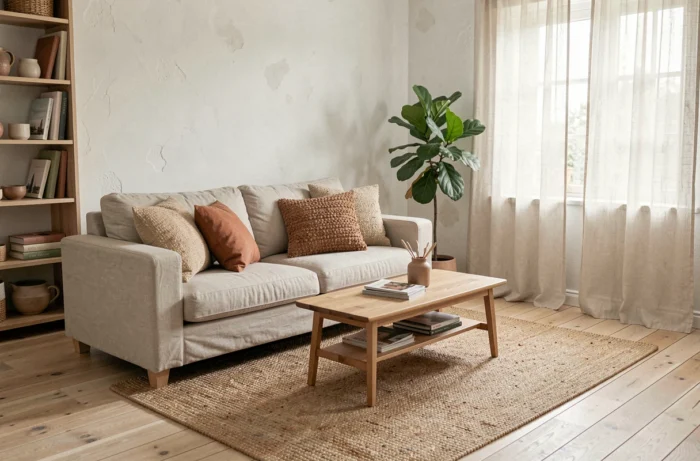
A sofa with worn-out fabric, a living room wall that’s too white, a bedroom filled with mismatched furniture collected over three moves: we all know that moment when the urge to refresh a room runs up against the budget or the lease.
Decree No. 2024-134, which requires public-sector furniture purchases to include minimum shares of reused goods, reflects a broader shift: interior decorating no longer automatically means buying new. Repairing, thrifting and rearranging are often more effective (and more personal) than clearing out an online catalog.
Refresh a room without replacing everything: repair, secondhand finds and rearranging
Before ordering anything, start with an honest inventory. Clear the room visually: group items by function (storage, seating, lighting, purely decorative) and identify what’s actually looking tired. Often, the problem isn’t the furniture itself but where it’s placed or a worn detail.
The furniture repair bonus, extended in November 2024 to furniture other than seating and bedding, helps cover some of the cost of repairs. Re-gluing a veneer, replacing a tabletop or refinishing a chest of drawers costs less than buying new and preserves a style that current ranges don’t replicate.
For anything you’re missing, browse Lozzoo’s home section and compare practical ideas with local secondhand furniture listings. A 1970s armchair found at a neighborhood market and reupholstered in linen has a character no recommendation algorithm can offer.
Another often-overlooked option is having your old furniture taken back when you buy new. French regulations provide for free take-back of used furniture of the same type under certain conditions. This saves you a trip to the recycling center and ensures the old furniture is directed toward reuse or recycling.
Colors and materials: update your living room or bedroom without major renovations
If you’re renting, drilling into a load-bearing wall or replacing the flooring isn’t an option. But there are still plenty of ways to make a difference.
- Painting an accent wall in a muted shade (terracotta, sage green or slate blue) can change the feel of an entire living room for the price of a tin of paint and a few hours’ work, with no structural changes.
- Textiles (heavy curtains, cushions and rugs) absorb sound, warm up existing colors and can be changed with the seasons. You can alternate between two sets of cushion covers to change the mood without adding clutter.
- Indirect lighting (a table lamp, a simple string of lights or a removable wall light) replaces the harsh glare of an overhead fixture and creates zones in an open-plan room, defining the space better than a partition.
Natural materials (rattan, unfinished wood, linen and terracotta) offer a cohesive visual vocabulary without locking you into a single style. You can mix a solid oak table, a wicker basket and a stoneware vase without making the room feel contrived, as long as you stick to a maximum of three colors per room.
Summer comfort and sun protection: where decor meets regulations
Blinds, hinged shutters and adjustable external sunshades serve a dual purpose: thermal and aesthetic. Summer comfort has become part of the conversation around home renovations, with measures debated at the legislative level. It’s no longer just about heating, but also about a home’s ability to remain livable during a heatwave.
Choosing external sun protection isn’t just a matter of taste. In a protected area, approval from the French Heritage Architects may be required to install a blind or sunshade. The legislative debate in November 2026 focused specifically on the scope of this approval, showing that the tension between thermal comfort and heritage preservation remains strong.
In practice, if you live in a listed building or within the grounds of a historic monument, check with your local town hall for any local requirements before ordering anything. A wooden shutter painted in the color specified by the regulations can fit perfectly into a cohesive decorating scheme, as long as you plan for the restriction from the outset.
Kitchen and bathroom decorating ideas without removing the tiles
These two rooms are a common source of frustration: dated tiles, darkened grout and not enough storage. The instinct may be to rip everything out, but costs can quickly spiral.
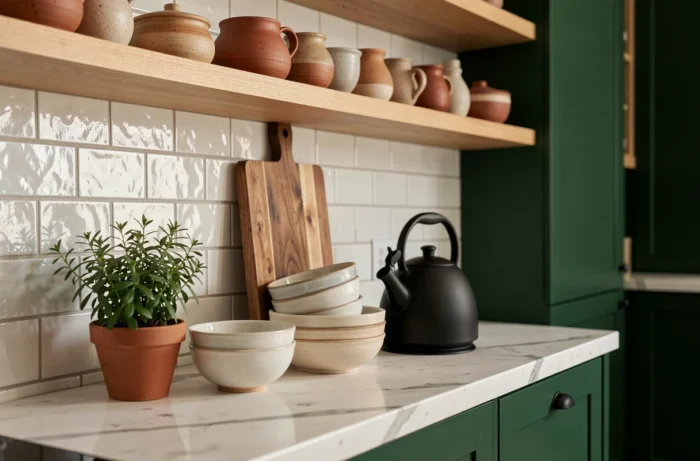
In the kitchen, replacing cabinet handles, adding a peel-and-stick backsplash and installing an open wooden shelf to display jars and cutting boards is enough to transform the feel of a kitchen without altering the structure. Invest in two or three high-quality accessories that are on display (a stainless-steel kettle, a marble mortar) and also serve as decor.
In the bathroom, regrouting can make all the difference. A mirror larger than the original, leaned against the wall or attached with a removable system, makes the space look bigger. Natural-fiber baskets stacked beneath a freestanding sink can replace a storage cabinet without drilling into the wall.
What these updates have in common is that they’re reversible. You can undo them at the end of your lease without leaving a trace, which remains the main constraint for renters. The rules vary by lease: a mobility lease allows less customization than a standard lease, and some landlords will approve minor work as long as you consult them beforehand.
A home that feels like you isn’t created with a single order. Start with one room, repair before replacing, thrift before buying new, and check the rules before drilling. The result rarely looks like what you imagined on a Pinterest board, but it has something catalog interiors don’t: it tells a real story.