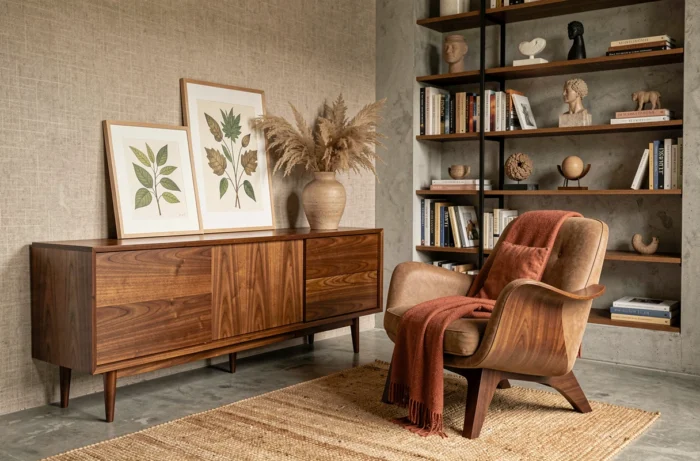
A sofa found at a flea market, a coffee table refurbished one Sunday afternoon, a contemporary light fixture placed beside them: this kind of mix creates interiors unlike anyone else’s. Transforming your décor doesn’t necessarily mean replacing all your furniture.
In France, 74% of residents bought or sold at least one second-hand item in 2025 (excluding cars and property), according to a survey by 60 Millions de consommateurs published in February 2026. Elegant, personalized décor depends less on your budget than on having a plan: knowing how to bring pieces from different backgrounds together in a cohesive whole.
Second-hand furniture: creating an elegant interior despite the limitations
Have you noticed how an antique piece of furniture immediately draws the eye when placed in a modern setting? This contrast works because it creates visual tension between two eras. Yet furniture reuse remains a small market segment: it accounted for 1.4% of the furniture market in 2023, according to Le Journal des entreprises. In other words, buying second-hand furniture is still a conscious choice, not a mainstream habit.
The main challenge isn’t the price, but availability. Unlike with new furniture, you can’t choose the exact shade, size or fabric of a vintage armchair. You need to reverse the usual approach: start with the piece you’ve found, then build the rest of the décor around it. A 1960s walnut chest of drawers, for example, calls for a warm color palette. An industrial metal sideboard points towards cooler tones and raw materials.
Before buying a second-hand piece of furniture, check these three things:
- The supporting structure (legs, frame, hinges): structural damage is expensive to repair and can shorten the furniture’s lifespan.
- The upholstery or finish (fabric, leather, veneer): it’s easier to replace or restore than the frame, making it possible to customize the piece at a lower cost.
- Exact dimensions, measured on site: even a difference of a few centimeters can throw off a carefully planned layout.
Browse the catalogs and ideas available on dkomdeco.fr to spot style combinations that work, then adapt them to the pieces you find on the second-hand market.
Balancing colors and materials in a mixed-style interior
Mixing old and new doesn’t mean piling up mismatched objects. A cohesive look depends on a clear visual thread. The easiest approach: choose no more than three colors for each room. Two neutral shades (off-white, light gray, beige) and one accent color (terracotta, teal, sage green) are enough to bring furniture from different eras together.
Materials play the same role as colors. An interior made entirely of wood can feel heavy. A space filled with metal can seem cold. Combining two or three materials adds visual depth with little effort. Wood and linen, metal and velvet, rattan and polished concrete: each pairing creates a distinct mood.
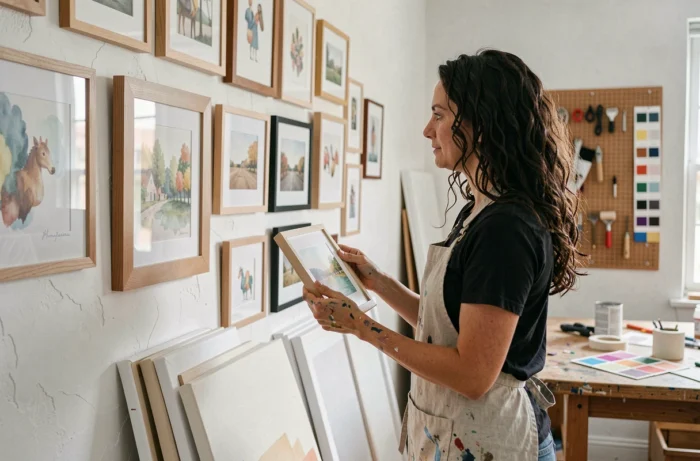
A common mistake is to accumulate decorative objects to fill an empty wall or shelf. Empty space is part of the composition. A wall with one well-placed picture makes more of an impact than a row of small, unrelated items. Before adding something, ask yourself: does this piece complement the color palette or disrupt it?
Repair and upcycling: personalize furniture instead of buying new
Repainting a piece of furniture can completely change its appearance. But personalization goes beyond a fresh coat of paint. Replacing the handles on a sideboard, changing a sofa’s legs or reupholstering a seat in a fabric of your choice can turn an ordinary piece into something unique.
Repairing furniture extends its lifespan and makes an interior feel less uniform. In 2023, more than 90,000 tonnes of items were reused or given a second life across six extended producer responsibility (EPR) schemes in France, including furniture, according to ADEME data. This figure reflects a broader shift, even though there’s still a long way to go.
One practical point that’s often overlooked: under certain conditions relating to sales floor space or delivery revenue, French regulations require furniture retailers to take back used furniture. Before throwing away a table or wardrobe, check whether your retailer offers this service. You’ll free up space, and the furniture will enter a reuse scheme instead of ending up in landfill.
Lighting and layout: the details that transform a room’s atmosphere
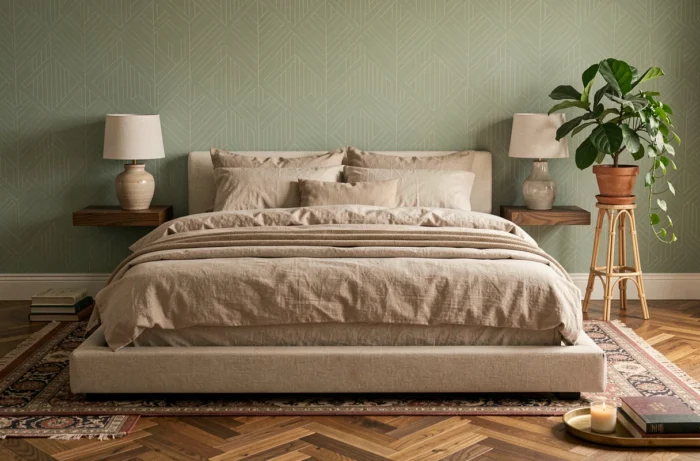
Light changes how we perceive colors, space and materials. The same green velvet armchair can look luxurious in warm light and dull under a white fluorescent bulb. Using multiple light sources at different heights (a floor lamp, wall sconce and table lamp) lets you adjust the mood throughout the day.
Furniture placement matters just as much as the pieces you choose. Moving the sofa away from the wall, even by thirty centimeters, creates a sense of space. Placing a side table between two mismatched armchairs creates a visual link between them. These adjustments cost nothing and can change the feel of the entire room.
Think of textiles as a way to tie everything together, too. A rug that picks up the colors of the cushions and curtains brings a living room with furniture from different sources into harmony. Textiles are the most affordable way to bring a mixed-style interior together, and the easiest thing to change with the seasons.
An elegant, personalized interior doesn’t come together with a single order. It takes shape through thoughtful additions, with each new find helping guide the next choice. Rather than holding you back, limited availability encourages more distinctive choices than any catalog ever could.


