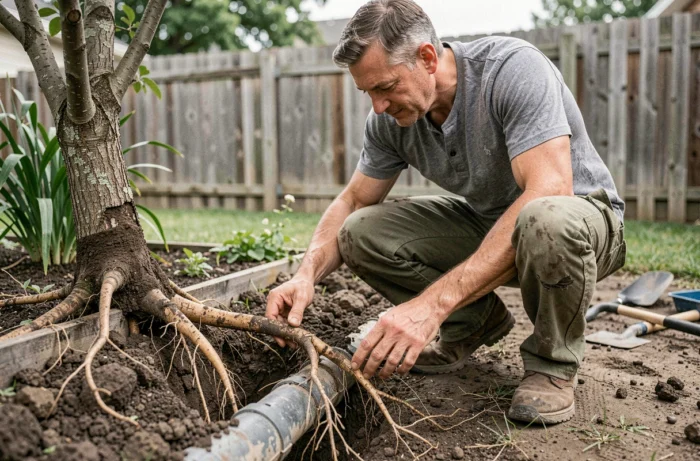
Before planting a shrub or digging a trench for a flower bed, remember that garden soil often hides much more than dirt. Wastewater pipes, drinking water pipes, electrical conduits, telecommunications ducts and gas pipes run through many residential properties.
Which plants you choose and where you place them depend directly on the type and location of these utility lines. Root damage to sewer pipes is frequently discussed, but the risks associated with other underground utilities are less well covered in standard gardening guides.
Underground utilities in the garden: more than just sewer lines
Most articles on the subject focus on wastewater pipes. Roots seek out moisture, work their way into defective joints and eventually block the pipe. This is a real and well-known problem.
Gardens may also contain drinking water pipes, low- or medium-voltage electrical cables, fibre-optic or telephone ducts, and sometimes gas pipes. Each type of utility has its own requirements for depth and materials, as well as its own vulnerabilities to roots and excavation tools.
A polyethylene drinking water pipe responds differently to root pressure than a PVC sewer pipe. Even a sheathed electrical cable buried at the required depth can be damaged by an ill-judged spade strike when planting a tree. So before choosing your plants, the first step is to find out exactly what runs beneath your feet—and where.
To plant near pipes safely, you first need to map all the utility lines, not just those connected to the sewer system.
Locate underground utilities before digging: practical steps
In France, anyone planning excavation work—even in their own garden—can consult the single online utility portal. This platform lists the utility operators serving a given property. The plans provided by operators show the approximate routes of pipes and cables.
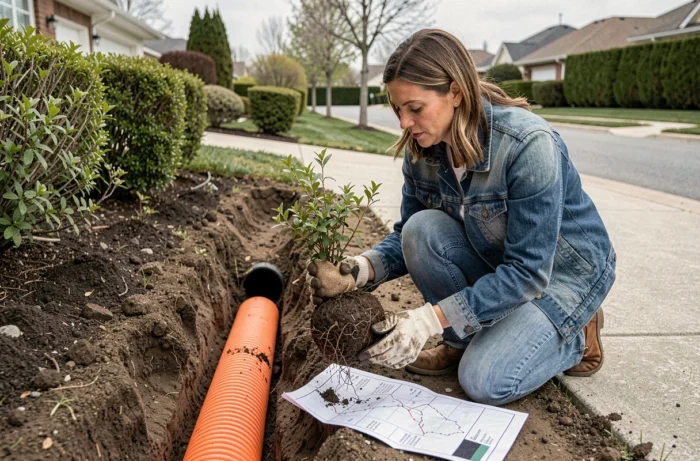
Plans are not always accurate to the centimetre. Older utility lines, particularly in housing developments built several decades ago, are sometimes poorly documented. In such cases, a utility locator or a survey using test holes can help pinpoint their routes.
For homeowners, the minimum steps to take before planting a tree or deep-rooted shrub are:
- Check the site plan for the property, often included with the building permit, which shows the main utility lines (water, electricity, gas and telecommunications).
- Contact local utility operators (the water supplier, electricity network operator and telecom provider) for detailed plans if the route is unclear.
- Look for inspection chambers, stopcock covers, utility boxes and marker posts that indicate an underground utility nearby.
- If you are still unsure, hire a professional equipped with an electromagnetic locator or ground-penetrating radar.
This initial survey determines everything that follows. Planting a large-canopied maple above a shallow-buried electrical duct can complicate future maintenance work, even if the roots do not directly damage the cable.
Planting distances and utility type: how requirements vary
Safe distances between plants and pipes vary depending on the utility involved. For sewer lines, the commonly accepted rule is to keep large-growing trees several metres away from the pipe. Shrubs with shallow roots can be planted closer, provided the joints are checked for damage.
Other utilities have different requirements. Buried electrical cables need enough clearance to allow access in the event of a fault. Planting a dense shrub directly above one makes repairs more difficult and may mean it has to be removed. Gas lines require a clearly defined no-planting zone, as specified by the operator; failure to comply can make the property owner liable.
Drinking water pipes, often buried between a few dozen centimetres and one metre deep depending on the region, are vulnerable to trees with taproot systems. A willow, poplar or plane tree planted too close can cause leaks at the joints, leading to excess water consumption that may be difficult to detect.
Telecom and fibre-optic ducts
Telecommunications ducts are generally shallower than other utility lines and are also more vulnerable to mechanical damage. A single careless shovel strike while planting can sever a fibre-optic cable. The risk comes less from the roots themselves than from digging without taking care.
Choosing plants based on how close they are to pipes
The main factor to consider is the plant’s root system. Plants with shallow, spreading roots are less likely to cause problems than species with deep taproots, provided the pipe itself is not buried very close to the surface.
Plants generally considered suitable near pipes include herbaceous perennials, ornamental grasses and some compact shrubs with moderately developed roots. Boxwood, lavender, hebe and small euonymus varieties develop limited root systems that do not threaten pipes.
Trees to avoid near any underground utility are those whose roots spread through a large volume of soil: willows, poplars, plane trees, black locusts and horse chestnuts. These species actively seek out water and can travel considerable distances underground.
Between these two extremes, some medium-sized trees may be suitable if planted far enough away. Field maples, ornamental apple trees and flowering cherries have more contained root systems, but they still need to be planted at an appropriate distance from the type of utility involved.
Root barriers and mechanical protection: a partial solution
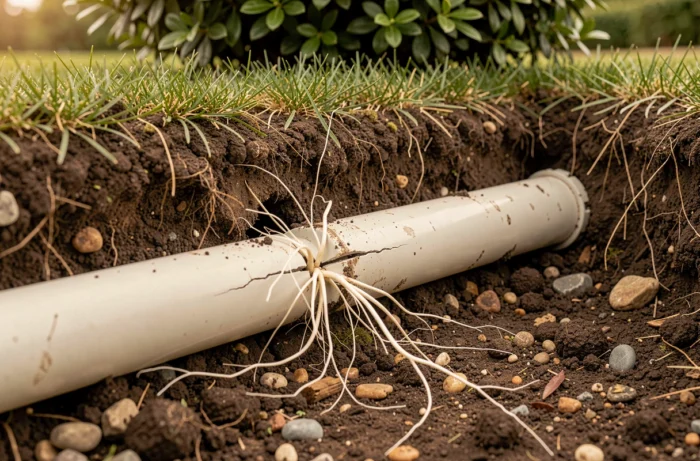
Root barriers made from high-density polyethylene membranes are often presented as a universal fix. They can indeed redirect roots at a given depth and protect pipes in the short to medium term.
How effective they are depends on the quality of installation and the depth of the barrier. Roots will grow around a membrane that is too short within a few years. A poorly sealed barrier will let the finest rootlets through—the very ones that work their way into pipe joints.
For utilities other than sewer lines, root barriers do not solve the access problem. Even if the roots do not reach an electrical cable, a shrub planted above it will have to be removed during repairs. Keeping a clear access corridor above every utility line remains the most effective long-term precaution.
Choosing plants near buried pipes is not simply a matter of following a list of permitted or prohibited species. It depends on the type of utility, its depth and condition, and how often maintenance work is expected. An up-to-date site plan and a discussion with the utility operators will help you plant with confidence and avoid unpleasant surprises the first time you put a spade in the ground.


