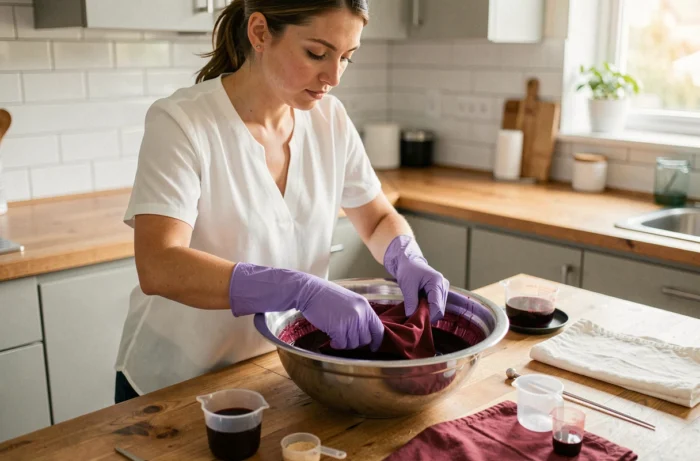
A 100% polyester windbreaker dipped in a conventional dye bath comes out exactly the same color as before. The problem isn’t always the dye itself; it’s often a surface treatment invisible to the naked eye. Before dyeing polyester, you first need to check whether the fabric can physically absorb the pigment, which immediately rules out some technical garments.
Water-repellent finishes and coatings: why polyester dyeing fails before it even begins
People often assume that a garment’s fiber content is enough to determine whether it can be dyed. In theory, 100% polyester should take disperse dye. In practice, many jackets, sports trousers, and outdoor garments are given a water-repellent finish or coating at the factory, creating a barrier between the fiber and the dye bath.
This layer prevents the dye from penetrating the fiber. The result may be uneven color, stains, or simply no change at all. The fabric isn’t damaged, but the result is unusable.
Testing a hidden area before dyeing the entire garment is still the most reliable approach. Put a few drops of water on the inside of a seam: if the water beads up and runs off without soaking in, that’s a sign of an active water-repellent treatment. Fabric that absorbs water within a few seconds is much more likely to take the dye.
If you’re wondering how to dye polyester properly, this diagnostic step helps you avoid wasting time and product on a garment that will never take the color.
Disperse dye and temperature: the combination that works on polyester
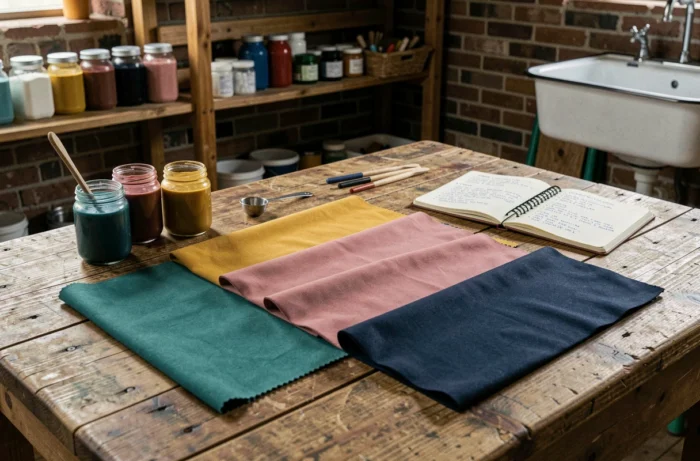
Polyester is a hydrophobic synthetic fiber. Conventional dyes designed for cotton or wool slide off without bonding. The only dye family suitable for pure polyester is disperse dyes, formulated to penetrate the fiber when heated.
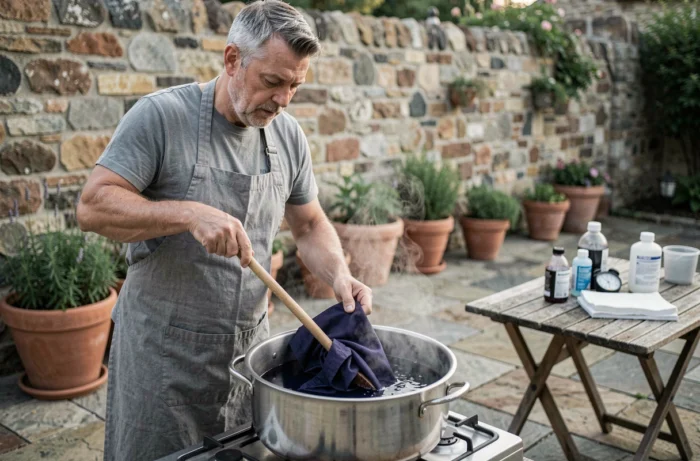
The temperature of the dye bath plays a central role. For home dyeing, the temperature is around 100 °C, which is still below industrial conditions (high temperature and pressure). This difference explains why home dyeing cannot reproduce the even results of factory dyeing.
Recommended equipment and dyes
- Disperse dye such as iDye Poly or an equivalent, specifically formulated for synthetic fibers. All-purpose dyes do not work on pure polyester.
- A large stainless steel or enamel pot (not aluminum, which can react with the dye). The fabric needs to be able to move freely in the bath.
- A utensil for stirring the fabric regularly throughout the dye bath to prevent streaks and undyed areas.
- White vinegar or the fixative supplied with the dye, depending on the manufacturer’s instructions.
Dissolve the dye in hot water before adding the fabric. The garment must be clean and free of fabric softener residue. Any fabric softener residue forms a film that blocks pigment penetration, just like a water-repellent finish.
Rinsing: the often-neglected step
In industrial dyeing, a specialized cleaning process removes excess dye left on the fiber’s surface. If this surface dye isn’t removed, it reduces colorfastness to washing and rubbing. At home, you don’t have access to the same process.
To compensate, rinse the fabric several times in warm and then cold water until the water runs clear. This extended rinsing won’t guarantee the same colorfastness as an industrial treatment, but it greatly reduces bleeding during the first few washes.
Dyeing a polyester-cotton blend: why one step isn’t enough
Everyday clothing is rarely made from pure polyester. A T-shirt labeled “65% cotton, 35% polyester” presents a practical challenge: each fiber requires a different class of dye. Cotton is dyed with reactive or direct dyes, while polyester requires disperse dyes.
Using only a cotton dye leaves the polyester fibers unchanged. The final result depends on the proportion of each fiber: the higher the polyester content, the paler or less even the color will be compared with the shade you’re aiming for.
Double dyeing or compromise
In industry, dyeing steps or dyes suited to each component are combined. At home, this double-dyeing process is technically possible (one bath for the cotton and a hot bath for the polyester), but it’s complex and can damage the fabric.
The most realistic solution for a blend is to accept a result that’s lighter than the stated shade. Aim for a change in tone rather than a bold, solid color. If polyester makes up more than half the fabric, home dyeing produces results that are too uneven to be reliable.
Caring for dyed polyester: keeping the color vibrant over time
Polyester dyed at home is more delicate than fabric dyed at the factory. The first few washes are critical: wash in cold water, inside out, and without fabric softener. A short cycle reduces the mechanical abrasion that can wear away surface pigment.
- Wash separately for the first three or four cycles to prevent dye from bleeding onto other clothes.
- Avoid tumble-drying, as the heat can affect how well the disperse dye is fixed.
- Don’t use bleach- or oxygen-based stain removers, which directly attack the pigment.
Colorfastness varies depending on how well the fabric was initially rinsed and the type of dye used. On well-prepared pure polyester with no finish, the color can last for several dozen washes. On a blend or treated fabric, fading will be faster and less predictable.


