
Receiving a plant you ordered online with wilted leaves or frozen potting soil is the kind of disappointment that can put you off for a long time. Ordering plants online means keeping a few factors in mind that product listings don’t always highlight.
The delivery time shown on the website, for example, only tells part of the story: the promise of “dispatched within 24 hours” actually refers to preparation time (usually 24 business hours), while shipping adds another 24 to 48 hours after dispatch. In other words, you should often allow at least three business days between placing your order and receiving it.
Choose a delivery date to protect your plants from cold and heat
Have you noticed that experienced nurseries don’t ship in just any weather? Some sellers deliberately delay shipments based on weather conditions or road disruptions. This isn’t a delay for its own sake: it’s a precaution that protects roots and foliage.
The real risk lies at both extremes. In winter, a parcel left outside a door or stored in an unheated pickup point over a weekend can expose a plant to several hours below freezing. In summer, a van parked in direct sunlight can turn a cardboard box into a greenhouse.
Schedule delivery for a day when you’ll be home to receive the parcel. If you’re ordering during a cold snap or heatwave, choose home delivery rather than a pickup point, where the parcel may sit without any temperature control. Track your shipment as soon as dispatch is confirmed: several sellers’ terms and conditions warn that delays in collecting a parcel held at a pickup point can affect the quality of the delivery.
If you’re exploring ordering flowers by mail from Botagora, you’ll see that planning the delivery date is an integral part of the ordering process.
Plant packaging and shipping: what delivery times don’t tell you
A website promising fast delivery grabs your attention. But speed alone doesn’t guarantee that your houseplant will arrive in good condition. Reviews posted by buyers on verified platforms mention damaged plants after an impact or missing items, alongside carefully packed parcels and fast deliveries.
What to check before placing your order
- Does the seller clearly distinguish between the dispatch date and the estimated delivery date? If only the preparation time is shown, shipping time is added without being specified.
- Does the website say that it adjusts shipments to suit the weather? A seller who ships regardless of conditions at -8 °C puts your plants at unnecessary risk.
- Does customer service handle shipping issues (reshipment, refund, replacement)? This matters just as much as delivery speed.
Suitable packaging protects the pot, secures the root ball and limits movement of the foliage. Specialist sellers use cardboard or kraft paper inserts rather than bubble wrap, which traps moisture and encourages mold during transit.
Potted plants and home delivery in France: how to identify a reliable online seller
The growing number of online plant shops makes it hard to know where to start. Here are some practical ways to tell a reliable seller from an attractive storefront.
Plant passports and traceability
A plant passport is required for certain plants sold remotely to end users within the European Union. This document certifies that the plant has been inspected and found to meet plant health requirements. The rule depends on the species concerned and does not apply to all plants.
In practice, check that the product listing or terms and conditions mention a plant passport when one is required. It’s a sign of a reputable seller, especially for cross-border orders within the EU.
Establishment guarantee and return policy
A seller that offers a freshness guarantee stands behind the quality of its supply chain. Guarantee periods vary: some sellers give you five days after delivery to report a problem, while others offer several weeks for trees and shrubs. Read the terms before you order, not afterwards.
After-delivery care: steps to help a delivered plant thrive
Delivery isn’t the end of the journey; it’s the start of an adjustment period. A plant that has travelled in a closed box for two or three days has been under water and light stress.
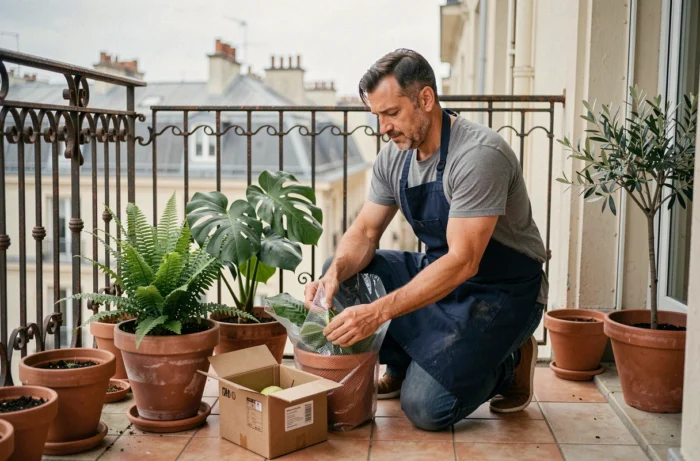
- Unpack the plant as soon as it arrives and check the root ball. If the potting soil is dry, water lightly without soaking it.
- Place the plant somewhere bright but out of direct sunlight for the first few days. Gradual acclimation helps prevent temperature and light shock.
- Don’t repot it straight away. Let the plant settle into its original pot for one to two weeks before moving it to a larger container.
- Remove any leaves that have turned yellow or were broken during transit: this lets the plant focus its energy on healthy parts.
If you’re new to this, choose hardy varieties for your first home-delivery order: plants with thick, sturdy foliage withstand bumps and temperature changes better than those with thin, delicate leaves.
Some garden plants, trees and bare-root shrubs travel better in autumn or early spring, when they’re dormant. This timing reduces shipping stress and helps them establish in the ground or in a large pot.
Your choice of seller, delivery schedule and initial care after arrival all work together to determine whether your order thrives. Compare actual delivery times (dispatch plus shipping), not marketing slogans. And when extreme weather is forecast, it’s better to wait a few days than to find a parcel of frozen plants on your doorstep.


