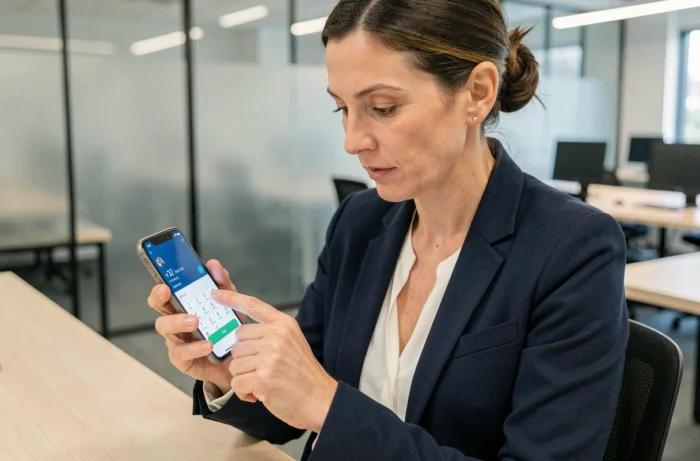
Dialing a Belgian number from France is about more than just adding +32 in front of a string of digits. The process follows one simple rule: drop the initial zero. But that’s rarely where mistakes happen. They usually stem from confusing international calls with roaming, or from carelessly calling back a premium-rate number starting with 090X.
Calling Belgium internationally or roaming: two different pricing arrangements
A call made from France to a Belgian number is an international call, charged according to the international rates included in your plan. The EU’s “Roam like at home” rules do not apply here: they cover roaming, meaning the use of a French line on a foreign network while you are physically in Belgium.
The distinction is clear. From an office in Lyon, calling a Brussels mobile number using +32 uses your out-of-plan allowance or international calling credit, depending on your plan. If you are in Brussels with the same French line and call a local Belgian number, that falls under EU roaming and is generally included at no extra cost.
We find that this confusion causes most unexpected charges on phone bills. Before dialing, check whether your plan includes calls to Belgium (look for “international calls” or “calls to Europe”), not just roaming in Europe.
How to dial +32 from a French landline or mobile
The format is the same regardless of the device you use. The initial zero in the Belgian number is dropped when you add the international dialing code. That’s the only change to remember.
To use Belgium’s +32 dialing code, simply follow this standard format for all Belgian numbers, both landlines and mobiles.
- From a mobile: replace the initial 0 with +32. A number displayed as 0470 12 34 56 is dialed as +32 470 12 34 56.
- From a landline: dial 00 32, then the number without its 0. A Brussels landline number, 02 345 67 89, becomes 00 32 2 345 67 89.
- From a VoIP line or softphone: the E.164 format (+32 followed by the number without the zero) is the standard accepted by almost all SIP platforms.
The classic pitfall is keeping the zero after +32. Dialing +32 02 345 67 89 produces an invalid number. The network interprets “02” as a nonexistent two-digit area code preceded by an extra zero.

Belgian area codes: what the prefix tells you (and what it no longer tells you)
Belgium’s numbering plan divides the country into around 40 geographic areas. Brussels uses the prefix 2, Antwerp 3, Ghent 9, and Liège 4. Longer prefixes (two digits) cover less densely populated areas: Namur uses 81, Charleroi 71, and Hasselt 11.
For a landline, the area code remains a reliable geographic indicator. The situation has changed for mobile numbers. The 046x, 047x, 048x, and 049x ranges were historically assigned to specific operators (Proximus, Orange Belgium, Base). Number portability has made this association obsolete: subscribers can keep their prefix when switching networks.
In practice, this means you can no longer identify a Belgian caller’s operator from their mobile number without checking the BIPT’s number portability database.
Belgian special numbers to check before calling back
The 090X and 070 prefixes are used for premium-rate or higher-rate numbers. An international call to these numbers from France combines the premium-rate charge with the international rate. Calling back an unknown number starting with one of these prefixes without checking it first can result in significant charges.
By contrast, 0800 numbers (free to call in Belgium) are generally not reachable from abroad, or are charged as standard international calls. The free-call rate does not apply across the border.
Calling Belgium from France: formatting errors in automated systems
Online forms, CRMs, and call-routing APIs most often expect the E.164 format: +32 followed by the number, with no spaces or initial zero. A number stored in the local Belgian format (with the 0) can cause calls to fail silently in automated systems, without any clear error message.
Three formats are used in databases:
- Belgian local format: 02 345 67 89 (usable only from within Belgium).
- International format with 00: 00 32 2 345 67 89 (works from a landline, but not in most cloud telephony software).
- E.164 format: +3223456789 (universal standard, with no spaces, compatible with all VoIP systems and SMS gateways).
When importing Belgian contacts into a telephony tool, we recommend normalizing all numbers to E.164 at the source. A simple replacement script (remove the initial 0, add the +32 prefix, and delete spaces) prevents downstream routing errors.
Time zone and availability
Belgium shares the same time zone as France (UTC+1, UTC+2 during daylight saving time). There is no time difference to account for when making business or personal calls, unlike most other international destinations.
+32 is one of the easiest dialing codes to use from France: the same time zone, the same rule for dropping the initial zero as with other European dialing codes, and no special routing requirements. The only real risks are confusing international calls with roaming charges on your bill, and calling back premium-rate numbers starting with 090X or 070 without checking them first. Standardizing your contacts in E.164 format takes care of the rest.


