
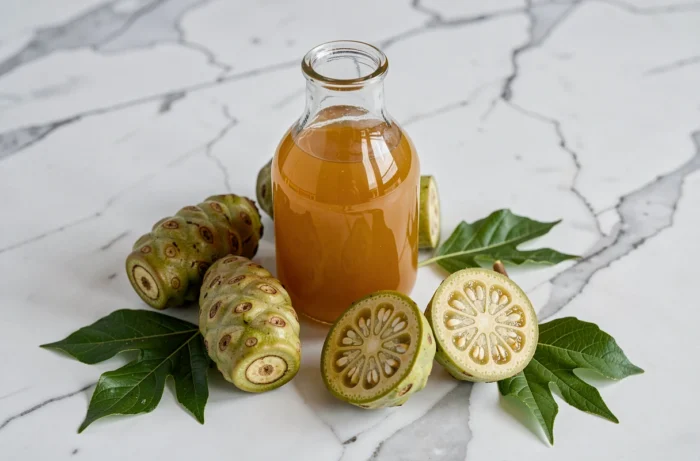
Noni, or Morinda citrifolia, is a tropical fruit with a bitter taste and strong odor that can be off-putting at first contact. Its juice, consumed for centuries in Polynesia and Southeast Asia, contains compounds that are of interest to nutritional research. Understanding what this fruit truly offers, without succumbing to exaggerated promises, allows for its intelligent integration into a daily diet.
Nutritional Composition of Noni Juice: What Sets It Apart from Other Fruit Juices
Before discussing benefits, it is essential to look at what is actually in a glass of noni juice. The fruit of Morinda citrifolia belongs to the Rubiaceae family, the same as coffee and madder. This botanical relationship is not trivial: it explains the richness of noni in alkaloids and phenolic compounds.
Noni contains proxeronine, a precursor to xeronine, an alkaloid involved in cellular function. It also contains anthraquinones, flavonoids, and polysaccharides. These molecules work in complementarity, making it difficult to attribute an effect to a single isolated compound.
A point often overlooked: not all commercial noni juices are created equal. Some products combine noni with grapes or other fruits, complicating the attribution of a benefit solely to noni. Checking the ingredient list remains the first useful reflex. To delve deeper into the topic, jus-de-noni.net details the different available forms and their specificities.

Antioxidant Properties of Noni: The Benefit Best Supported by Research
You may have noticed that some fruits oxidize quickly in the open air, while others resist better? This resistance reflects an antioxidant capacity. Noni is among the tropical fruits that exhibit notable antioxidant activity, thanks to its phenolic compounds and flavonoids.
The antioxidants in noni help neutralize free radicals, those unstable molecules that accelerate cellular aging. In practice, this means support for cells subjected to oxidative stress, whether related to diet, pollution, or physical exertion.
This is where the scientific literature is most robust. The antioxidant properties of noni juice are undisputed, although their extent varies depending on the quality of the fruit and the preparation method. A pure juice from ripe fruits of Tahiti or Polynesia offers a more concentrated profile than a diluted blend.
Noni Juice and Natural Defenses: What Studies Allow Us to Affirm
Noni is traditionally associated with supporting the immune system. The polysaccharides present in the fruit stimulate certain defense cells. Available research supports this, although it does not allow for the term “immune boost” in the medical sense.
Noni supports natural defenses without replacing medical treatment. This is a nuance that marketing packaging often overlooks. The fruit also contains documented antimicrobial properties, which explains its traditional use against minor infections in the Pacific Islands.
Additionally, some studies mention an anti-inflammatory effect. Joint comfort and recovery after exertion are among the uses reported by regular consumers. These experiences are consistent with the biochemical profile of the fruit, even if clinical evidence remains limited.
The Benefits of Noni on Energy and Mood
Many people who consume noni juice daily report an improvement in their vitality. This feeling is not purely a placebo: xeronine, present in precursor form in the fruit, plays a role in enzymatic regulation at the cellular level.
The effect on mood and energy cycles is harder to quantify. Current data suggest a gradual foundational benefit rather than an immediate boost. Noni acts as a regulator, not as a stimulant.
Precautions and Limits of Noni Juice for Health
Why is this section as useful as the previous ones? Because a natural product is not automatically risk-free. Noni deserves to be consumed with awareness.
Liver safety is the main point of vigilance. Rare cases of liver damage have been reported in connection with noni preparations. Individuals taking medications that may affect the liver should consult a healthcare professional before starting a regimen.
Here are the concrete precautions to remember:
- Avoid noni in case of liver disease or hepatotoxic treatment, as a precaution
- Seek medical advice if you are taking anticoagulants or antihypertensives, as interactions are possible
- Prefer a pure noni juice, organic if possible, to limit additives and blends that obscure effects
- Start with small quantities to observe digestive tolerance, as the taste and smell can sometimes be difficult to acclimate to
What Noni Does Not Do
Some claims circulate without solid foundation. Noni is not a cancer treatment, nor a remedy for diabetes. Preliminary studies explore its effects on blood sugar, but no data justifies replacing medical follow-up with noni juice.
A dietary supplement remains a supplement, not a substitute. Marketing promises that present noni as a miracle solution stray from what science actually documents. The fruit has interesting virtues, provided it is not attributed with what it cannot do.
Noni juice deserves its place in a varied diet, alongside other antioxidant-rich fruits. Its properties on natural defenses and joint comfort make it a foundational ally for daily health. The only condition: choose a quality product and respect liver precautions, especially in the case of medication treatment.


