
The fashion accessories market is undergoing a period of restructuring. On the regulatory side, the European Union has banned since July 19, 2026, the destruction of unsold clothing, shoes, and fashion accessories for large companies. In France, a textile repair bonus, launched in November 2023 as part of the AGEC law, allows for a reduction in the cost of certain repairs with certified artisans. These two mechanisms are gradually changing the way trendy accessories are produced, sold, and preserved.
European Regulation and Fashion Accessories: What is Changing Practically
The European measure against the destruction of unsold items does not only concern clothing. Fashion accessories (bags, belts, scarves, shoes) fall within its scope. For large companies, the ban has been effective since July 2026. Medium-sized enterprises will be affected starting in 2030.
The ESPR regulation (Ecodesign for Sustainable Products Regulation) also provides for progressive requirements on sustainability, reparability, and recycling, as well as a digital product passport. Its implementation will depend on the texts adopted category by category. Not all accessories are yet subject to these obligations, but the direction is set.
For those seeking unique and elegant pieces, these rules have a direct consequence: brands that focus on small series, sustainable materials, and careful craftsmanship are better positioned against these constraints than those that operate on massive volumes and quick rotations. It becomes possible to discover the By Julie collection to evaluate how an artisanal brand integrates these criteria into its selection of accessories.

Trendy Accessories 2026: The Materials and Shapes in Circulation
Current trends favor natural materials. Raffia, plant-based leather, wood, and woven fibers are making a comeback in collections of jewelry, bags, and belts. This is not purely an aesthetic phenomenon: regulatory pressure on material traceability is pushing creators to document the origin of their components.
In terms of shapes, two directions coexist. On one hand, voluminous pieces (sculptural earrings, oversized crossbody bags, wide scarves worn draped). On the other, a pronounced minimalism with clean lines, fine jewelry, and monochrome accessories.
Natural Materials and Artisan Pieces
Vegetable-tanned leather, cultured pearls, raw stones, and handwoven textiles form the foundation of artisanal collections. These materials age better than their synthetic counterparts, aligning with the logic of the repair bonus: a repairable accessory has a longer lifespan than a disposable accessory.
Expressive Jewelry or Discreet Jewelry
Earrings remain the focal point of understated outfits. A pair of hammered metal hoops or an asymmetrical pendant is enough to transform a basic look. Stacked bracelets (cuffs, bangles, fine chains) allow for modulation of intensity depending on the context, from the office to an evening out.
Choosing a Durable Accessory: Criteria to Check Before Purchase
The proliferation of labels and “eco-friendly” mentions makes reading complex. Not all accessories claiming a sustainable approach are equal, and the lack of a digital passport for most categories further limits consumer verification.
Some concrete criteria help sort through:
- The exact composition of materials, displayed on the label or product sheet (genuine leather, alloy, gold-plated, stainless steel), rather than a vague mention like “noble materials”
- The existence of a warranty or repair service offered by the brand, indicating confidence in the product’s longevity
- The place of manufacture and the size of the series, two pieces of information that help assess the level of quality control
- Eligibility for the repair bonus for shoes and certain textile accessories, verifiable with certified repairers
The repair bonus, still too unknown according to several institutional sources, provides a direct discount with certified artisans for interventions such as replacing a zipper, sewing a bag handle, or resoling. Checking the eligibility of a piece before purchase means incorporating maintenance costs into the overall budget.
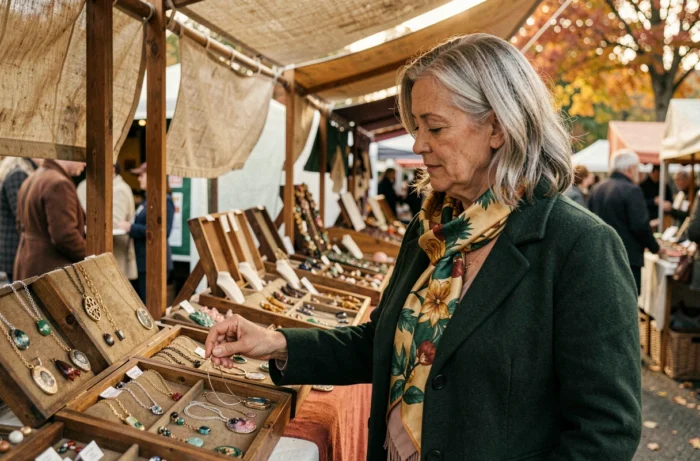
Enhancing an Outfit with an Accessory: The Logic of the Focal Point
The most effective approach to elevate a style is not to accumulate pieces but to create a unique focal point for each outfit. A single strong accessory draws the eye and structures the silhouette. Two or three competing pieces dilute the effect.
Practically, this means choosing between:
- A structured leather bag that anchors the outfit in a formal register
- A pair of graphic earrings that draw the eye upward toward the face
- A belt cinched at the waist that redefines the proportions of a dress or fluid ensemble
- A brightly colored scarf that breaks the monotony of a monochrome look
The rest of the accessories can remain discreet, or even absent. A well-chosen accessory is worth more than five trendy pieces worn together. This logic works equally well with sneakers as with dress shoes: it is the contrast between the sobriety of the outfit and the expressiveness of the accessory that creates the effect.
The Limits of Trend as a Purchase Criterion
Trendy accessories change every season. The pieces that circulate massively on social media in October 2026 will not be the same six months later. Investing in an accessory solely because it is trendy exposes one to a rapid buying cycle, which European regulation seeks to curb.
Pieces that transcend seasons share common characteristics: careful craftsmanship, a material that patinas rather than degrades, and a design sufficiently understated to adapt to multiple outfits. An artisanal piece of jewelry made from recycled metal or a full-grain leather bag retains its stylistic relevance well beyond a season.
Choosing an elegant and durable accessory is less about following trends and more about a clear assessment of what one will still wear in two years. This may be the only question worth asking in front of a display.


