How can the real impact of a solidarity-based sports initiative be measured? In France, dozens of projects combine sport and social inclusion, but their effectiveness depends on factors that are rarely compared: coaching, funding, the people reached and local roots. This article examines which programs work, how their resources differ, and what it takes to turn a one-off event into a lasting pathway to social inclusion.
Coaching and training: the unseen foundation of solidarity-based sport in France
Competitors are quick to list inspiring projects. They are less likely to mention what keeps these projects going over time: qualified coaches and support for volunteers.
A sports club that welcomes people who face barriers to taking part (people with disabilities, young people from priority neighborhoods, job seekers) cannot operate in the same way as a conventional club. Socio-sport coaching requires a dual skill set, combining technical and social expertise.
Some sports federations are now formalizing their social commitments and how they assess them, by defining indicators with their partners. This approach is still uncommon. Most associations operate without a shared framework, making it difficult to compare impact across regions.
A look at the latest news from Sports Solidarité shows that the most enduring projects have one thing in common: they invest as much in training their staff as they do in organizing events.
Comparing solidarity-based sports programs: target groups, funding and reach
Several types of programs operate across France, each with a very different approach. The table below summarizes the main models based on the information available.
| Program / type | Priority group | Funding model | Geographic reach |
|---|---|---|---|
| Pass’Sport (national assistance) | Low-income families, young people | State, Cnaf (additional assistance announced for 2027) | National |
| Inclusive clubs / Handiguide | People with disabilities | Sports federations, local authorities | Varies by region |
| Socio-sports associations (e.g., Kabubu, Sport dans la Ville) | Young people seeking employment, refugees, priority neighborhoods | Foundations, businesses, public grants | Mainly metropolitan areas |
| Charity events (sports Telethon, solidarity challenges) | General public | Donations, fundraising | National (one-off) |
Pass’Sport, for example, is being updated for the 2026–2027 season, with eligibility more closely tied to family income. The assistance is deducted directly from club registration fees, and additional support from Cnaf is planned from 2027 to help cover equipment costs.
Socio-sports associations, meanwhile, focus their work in large urban areas. Rural areas remain significantly underserved when it comes to sports-based support programs.
Inclusive sport after Paris 2024: from promises to on-the-ground realities
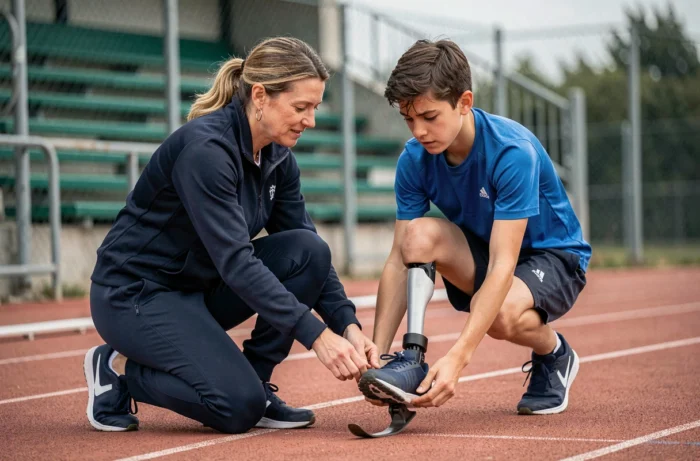
The Paris 2024 Paralympic Games brought unprecedented visibility to adapted sport. Two years later, access to inclusive sport remains a practical challenge that goes beyond media coverage alone.
The “Club inclusif” program aims to expand parasport opportunities across France, while Handiguide lists clubs offering different ways to take part. The goal is clear. But implementation faces structural barriers:
- A shortage of coaches trained in disability inclusion at amateur clubs, making it harder to welcome participants day to day
- Sports facilities are often not physically accessible, especially older venues
- The cost of adapted equipment, which standard grants rarely cover
Media visibility does not automatically make sport accessible. A club looking to welcome a wheelchair user needs dedicated funding, a qualified coach and suitable equipment. These three conditions rarely come together, particularly in towns with fewer than 10,000 residents.
When a sports club becomes a pathway to employment
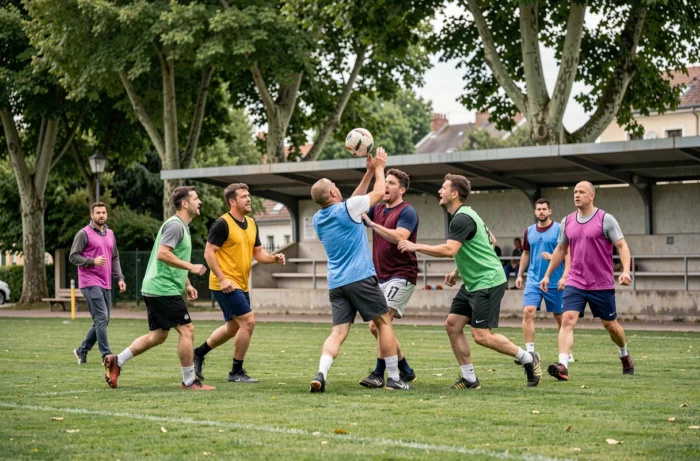
Some local initiatives turn sports clubs into meeting points for employment and local services. Job seekers and businesses meet in sports halls during professional matches. Other projects bring together young people from priority neighborhoods and professionals in the mountains, combining physical activity with informal conversation.
Sport then serves as a way to build connections, rather than an end in itself. The sports hall or hiking trail becomes a neutral space where the usual rules of professional interaction fall away. Feedback suggests that this change of setting makes it easier for people furthest from the job market to speak up.
This model raises a question about evaluation. How can you measure the effectiveness of a program whose primary goal—employment integration—falls outside the scope of sport? Federations that are beginning to develop shared indicators with their partners are opening up one possible approach, but there is currently no national framework for evaluating socio-sport programs.
What sets a one-off initiative apart from a long-term project
A charity challenge or solidarity tournament raises funds and awareness. A long-term project brings lasting change to sports participation in a local area. The difference comes down to three practical factors:
- Ongoing support: year-round coaching has an impact that a three-day event cannot replicate
- Strong partnerships: projects involving a local authority, a sports federation and a local business are better able to withstand budget pressures
- The ability to train future leaders: associations that train volunteers from the communities they support create a virtuous cycle of engagement
Funding from a foundation or business provides resources, but also creates dependency. The most resilient projects diversify their income through public grants, corporate sponsorship and service fees.
The challenge in the years ahead is not to multiply solidarity-based sports initiatives, but to document their results and share their methods. Without reliable indicators, every project has to start from scratch. It is this question of measurement, far more than visibility, that will determine the role of solidarity-based sport in French public policy.


